Cusp and Free Choice
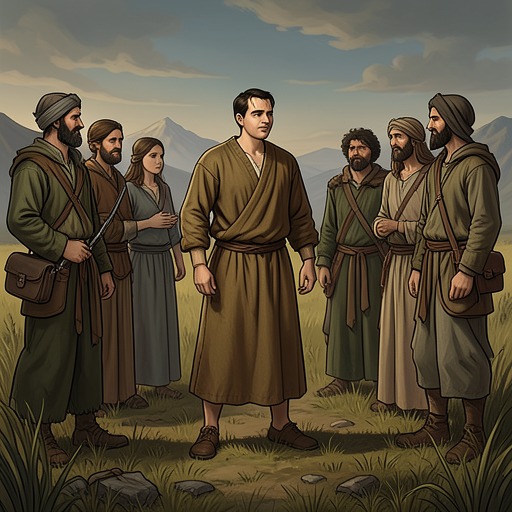
Stranger in a Strange LandCusp and Free Choice names the moment when a person must choose and cannot transfer responsibility for that choice to anyone else. Mike’s decision after leaving a room he experiences as profoundly wrong becomes a turning point in his growth: he recognizes that the action was his, accepts its consequences, and understands that this solitary freedom is also what makes genuine closeness possible.
The Choice and Its Cost
After returning home, Mike goes upstairs, shuts himself in his room, and enters a withdrawal trance to understand what has happened. He knows Jill dislikes his doing this during the day, though she tolerates it in private; the more serious matter is that he has acted against her instruction. He feels the human temptation to excuse himself as having been forced, but his Martian training will not allow that evasion. He had reached a cusp, where right action was required, and the choice had been his.
Mike concludes that he chose correctly, even though Jill had forbidden the choice. He considers whether he could have taken another course, including one that would not waste food, but recognizes that Jill’s injunction covered that alternative as well. The conflict therefore cannot be solved by finding a version of the act that avoids responsibility: he sees it as a contradiction in which choice itself remains unavoidable.
Selfhood and Responsibility
The episode marks Mike’s passage out of dependence. Shaped by human genes and Martian thought, he completes a stage of growth and ceases to be a nestling. The freedom he gains is not comfort or release from consequence. It brings the “solitary loneliness of predestined free will,” together with the Martian serenity to accept and even cherish that loneliness and its bitterness.
The cusp is Mike’s, not Jill’s. A water brother may teach, admonish, and guide, but cannot make the choice on another’s behalf. The act becomes a form of ownership that cannot be sold, given away, or transferred: Mike understands himself as inseparable from what he has done. His choice does not merely belong to him as a past decision; it becomes part of who he eternally is.
From Independence to Connection
This new selfhood does not isolate Mike from his brothers. Rather, once he knows himself as a self, he can move closer to them and merge without losing his integrity. He turns in thought to the brothers on Mars, both living and discorporate, and to the still-unknown powers of three on Earth with whom he may now connect. The movement is from solitary accountability toward freely chosen intimacy: connection becomes possible because the self entering it is no longer merely dependent.
The same principle helps explain why Mike’s acts can depart from Jill’s instruction without making their relationship meaningless. Jill can guide him, but a cusp cannot be shared as a decision. Their bond does not erase the boundary between their responsibilities; instead, Mike’s recognition of that boundary allows him to meet others as a self.
The Cusp in Practice
The principle recurs when Mike acts in a courtroom despite Jill’s rule that he must not do anything an ordinary human could not do where others might notice. Watching a sheriff testify about alleged public lewdness, Mike restrains himself, but the sheriff and judge suddenly find themselves entirely without clothes. Jill recognizes that Mike has encountered a cusp without discussing it with her. The incident places the abstract principle in a public setting: restraint, instruction, and consequence converge in an action for which Mike accepts responsibility.
Cusp also informs the Nest’s rites of choice and entry. Mike may offer water to a person before that person has advanced far through the circles: he selects Sam and Ruth while they are only in the Third Circle, and they later become priest and priestess. At the same time, membership is not imposed. The Innermost Temple is a place where newcomers may be invited to share water, but the invitation leaves room to wait or refuse. Patricia Paiwonski makes her own decision to accept the water offered by Mike and Jill, while the rite is presented as a lasting bond of trust and partnership. The difference between guidance and compulsion remains essential: a community can welcome, teach, and support, but the decisive consent belongs to the person choosing.
Choice Within the Ritual Community
The Nest’s ceremonies give social form to this balance. During a ceremony advancing candidates to the Eighth Circle, Jill appears to Ben Caxton in a vision as Mother Eve in a garden beside a serpent, then opens her arms to the candidates. The scene frames advancement as an invitation and passage into shared life, not as a substitute for individual assent. Elsewhere, Sam and Ruth describe being frightened before their Sharing-Water ceremony and then entering the pool when the Nest calls them forward; their account emphasizes both the difficulty of choosing and the welcome that follows.
Across these moments, Cusp and Free Choice links personal accountability to communal belonging. Water-sharing can establish profound obligations, and instruction can help a person approach readiness, but neither cancels the individual’s responsibility at the decisive point. Mike’s own growth follows the same pattern: he becomes capable of deeper union not by surrendering selfhood, but by accepting that choice—and its consequences—cannot be delegated.